Freezer Repair · Kirkland
Sub-Zero Freezer Frosting Over Again After Every Defrost
When frost is back within days of scraping it out, one defrost has not simply failed: damp air is getting in, or the heat that clears the coil has stopped. How to tell which before anyone quotes a compressor you do not need.
- Published
- Read
- 5 min
- System
- Freezer Repair
- Signed
- Dean Halvorsen
- Speciality
- Refrigeration technician — sealed systems and airflow
- Years on the tools
- 19
- Holds
- EPA 608 certified
Frost is the symptom people tolerate longest. The freezer is still cold, the food is still frozen, so it gets scraped out every few months and lives on the list of things to deal with later. But repeat frost on a Sub-Zero built-in is a specific, diagnosable fault, and the way it comes back tells you most of what you need to know about which one it is.
The rule worth holding onto: a freezer that frosts is a freezer that is still refrigerating. Ice forms because the system is cold enough to condense moisture out of the air. So whatever is wrong, it is not the compressor, and it is not the sealed system giving up. Something is either letting moisture in, or stopping the defrost cycle from clearing it.
Where the moisture is actually coming from
Air inside a sealed freezer contains a finite amount of water. Once it has frozen out onto the evaporator, that is the end of it — a genuinely sealed cabinet reaches equilibrium and stops accumulating. So persistent frost means fresh humid air keeps arriving.
There are only a handful of routes in:
- The door gasket. By far the most common. A flexible seal hardens with age and stops springing back. A gasket that has flattened along the hinge side, or lifted at one corner, leaves a gap you cannot see but can find with a dollar bill: close the door on it and pull. If it slides out with no drag, that section is not sealing.
- The door itself sitting proud. On heavy panel-ready doors the hinges settle over the years. The gasket is fine; the door is no longer square to the cabinet.
- Drawer rails packed with ice. Once ice has formed on the rails, the drawer stops closing flush, which lets more air in, which forms more ice. This one compounds.
- A blocked or misrouted drain line. Meltwater that cannot leave the cabinet refreezes at the base and then sublimes back into the air on the next cycle.
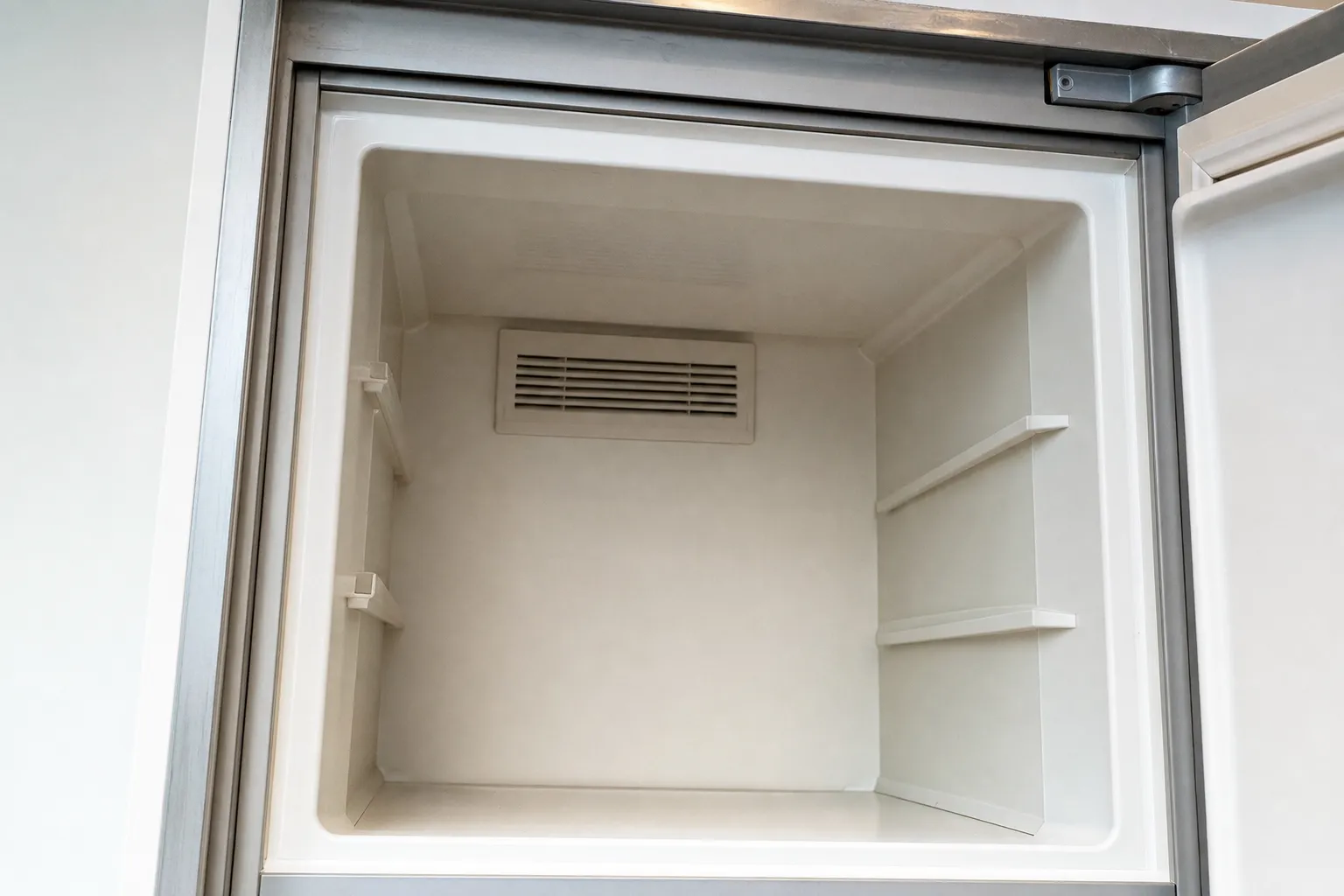
Timing helps here. Gasket-driven frost builds steadily and shows worst near the door. Defrost-driven frost concentrates on the back wall over the evaporator and comes back on a predictable schedule.
When the defrost circuit is the problem
Every frost-free Sub-Zero freezer runs a defrost cycle: a heater warms the evaporator briefly, the accumulated ice melts, and the water leaves through a drain. Three components have to cooperate — the heater itself, the thermistor or bimetal that decides when to stop, and the control that schedules the whole thing.
A failed defrost heater is the classic. The freezer keeps cooling perfectly, but nothing ever clears the evaporator, so ice builds layer on layer until airflow across the coil chokes off. That is when the symptom changes character: the cabinet starts running warmer even though the compressor is running more, because the air can no longer get through the fins.
A drifting thermistor is subtler. It reports a temperature that is plausible but wrong, so the control either ends the defrost cycle early — leaving a core of ice that grows a little each time — or never triggers one at all. This is the fault that produces “it was fine for a week after we cleared it, then it came back.”
A blocked drain sits in between. The defrost works, the ice melts, and the water has nowhere to go. It pools in the bottom of the evaporator housing, refreezes, and eventually builds a visible ramp of ice under the drawer.
What to check before you call anyone
There are four things worth doing yourself, in this order.
Read the actual temperature. Not the display — a thermometer standing in a glass of vegetable oil, in the middle of the compartment, left for 12 hours. That is Sub-Zero’s own method for a freezer; water is for a refrigerator or a wine unit. A freezer holding 0°F with heavy frost is a different fault from one that has drifted to 12°F.
Test the gasket all the way round. The dollar-bill test at eight or ten points, including both bottom corners, which are the ones that fail first on a heavy door.
Look at the back wall. Pull the drawers out and check whether the frost is concentrated over the evaporator cover, spread evenly, or worst near the door. Photograph it — it genuinely helps whoever comes out.
Clear the condenser. On a Classic or older built-in the condenser sits behind the top grille; on integrated column and drawer units it is behind the kickplate at floor level. In Kirkland homes with pets it clogs faster than most people expect. A choked condenser makes the whole system work harder and run longer, which is not the cause of frost but makes everything else worse.
The repairs, and roughly what they involve
A gasket replacement is the cheapest outcome, and the seal is only half of it: the door or drawer front is checked for sag and square first, because a new gasket on a front that hangs out of line leaks in the same place the old one did.
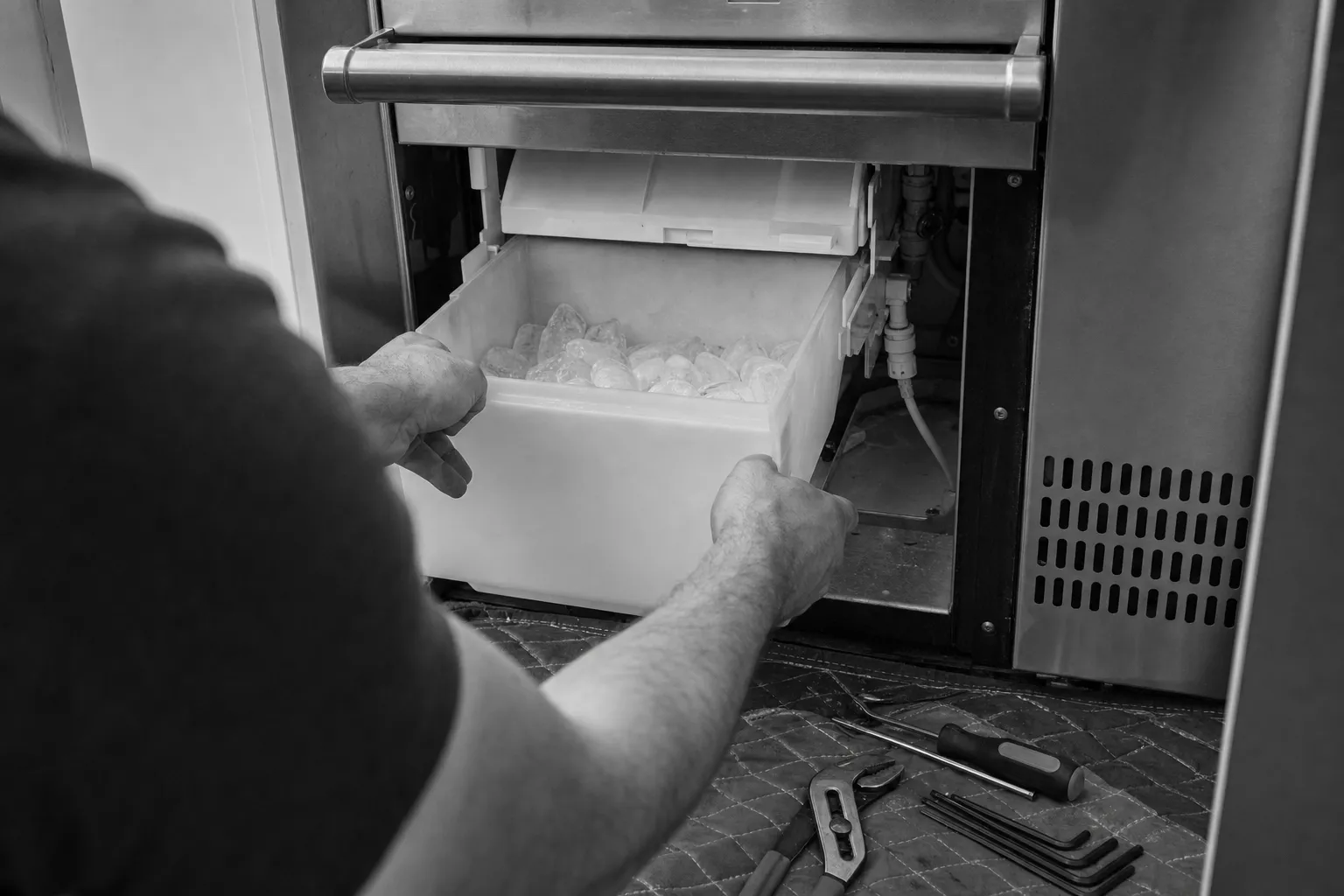
A defrost heater replacement — the defrost heater, thermostat or sensor band — means pulling the evaporator cover, which means fully defrosting the cabinet first. That is the part that takes time — a proper thaw runs several hours, and rushing it with a heat gun damages the aluminium fins.
A thermistor is a small part with an outsized effect and is usually replaced alongside the heater, because the labour to reach it is identical and the two age together.
A drain clear is often done at the same visit. Once the housing is open the drain path is right there, and flushing it takes minutes.
When it stops being worth it
Frost problems are, on the whole, the good kind of fault — the sealed system is intact and the cabinet is sound. The page on what fixing a frosted-over freezer costs sets each cause against its published band. The units where we advise against repair are the ones where the evaporator itself has corroded through after years of ice loading, or where a discontinued control board has failed on an older model.
Everything else — gaskets, heaters, thermistors, drains, hinges — is routine work on equipment that was designed to be serviced, including the older 501F and 601F all-freezers still running in Kirkland kitchens. A twenty-year-old Sub-Zero with a frost problem is usually a repair, not a replacement.
Follow-ups
How much frost is normal in a Sub-Zero freezer?
A light dusting on the food and a thin rime on the evaporator between defrost cycles is normal. A visible sheet on the back wall, ice on the drawer rails, or frost you can scrape into a handful is not — that is moisture arriving faster than the defrost cycle can clear it.
Will manually defrosting fix it permanently?
No. A manual defrost tells you nothing about the cause, and it is not a repair. It is still worth doing as a diagnostic step, because how fast the frost comes back narrows the fault: within days points at air getting in past a seal, while a slower return points at the defrost circuit. Sub-Zero Repair Kirkland, (425) 699-2400.
Is heavy frost a sign the compressor is failing?
Almost never. A failing compressor produces a warm cabinet, not a frosted one, because frost only forms where something is still making cold. Heavy frost means the refrigeration side is doing its job and either the defrost circuit or the moisture load has gone wrong. Sub-Zero Repair Kirkland, (425) 699-2400, checks both.
Can a door gasket really cause this much ice?
Easily. A gasket that has lost its seal on one corner pulls a continuous thread of humid room air into a 0°F cabinet. That air dumps its moisture on the coldest surface it meets, which is the evaporator, and it does it around the clock.